
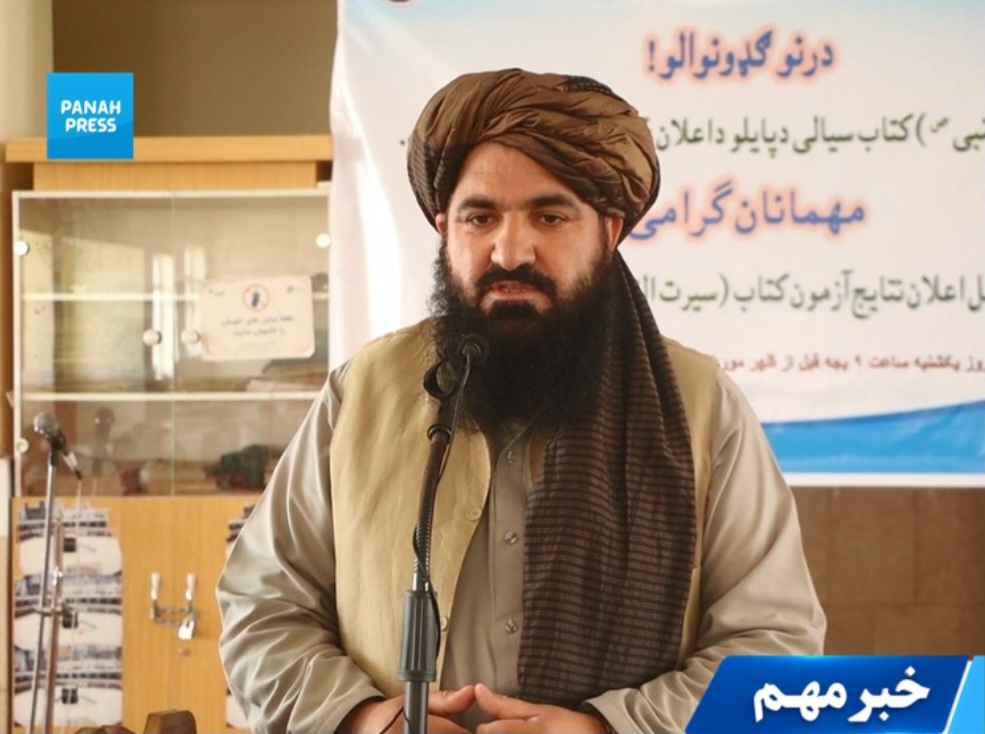
Saifuddin Mutasem, the Taliban’s Director of Information and Culture in Jawzjan province, has claimed that there are no unemployed people in Afghanistan. His remarks come as recent reports point to a shortage of job opportunities, rising housing rents, and worsening food insecurity across the country.
Speaking to Agence France-Presse (AFP), Mutasem said: “We have no unemployed people in Afghanistan, unless someone is too fond of their own comfort and decides not to work.”
The remarks come as the latest food security assessment shows that 15.9 million people, equivalent to 32 percent of Afghanistan’s population, faced Crisis-level or worse food insecurity in September and October 2026. Of these, approximately 3.4 million people were in the Emergency phase of food insecurity.
Millions of Returnees Increase Competition for Jobs and Shelter
According to AFP, more than six million Afghan citizens have returned from Iran and Pakistan over the past three years. This large-scale return, following an intensification of migrant deportations by neighbouring countries, has placed additional pressure on the labour and housing markets.
In Sheberghan, the capital of Jawzjan province, groups of daily wage workers gather along roadsides in search of work. Ghulam Sakhi Barat, a resident of the city, said job opportunities for local people had declined following the arrival of returnees.
He also said that while assistance is being provided to returnees, residents who have lived in the area for a long time are not receiving sufficient support.
Abdul Qader Hotak, another returnee, said that after returning from Pakistan, his children had turned to collecting rubbish to earn money.
Faqir Mohammad Khudabakhsh, a construction worker who has travelled between Afghanistan and Iran for years, said he now finds work only three days a week, making it difficult to cover his family’s living expenses.
Rising Housing Rents Add to Families’ Burdens
Alongside the shortage of jobs, rising housing rents have become a major concern for residents of Jawzjan. According to residents who spoke to AFP reporters, rents have increased by as much as 150 percent in some cases in recent years.
A 30-year-old government employee also said his rent had doubled over 18 months and that he was unaware of any committee established to control rents.
Mutasem, however, said the Taliban had established a nationwide committee to regulate housing rents and prevent increases. Some residents said they were unaware of the committee’s existence. The published report also provided no independent evidence of how extensively the programme had been implemented or how effective it had been in reducing housing costs.
International Organisations Warn of Worsening Living Conditions
According to the Integrated Food Security Phase Classification (IPC), Afghanistan’s food security situation could deteriorate further in the coming months. From November 2026 to April 2027, the number of people expected to face Crisis-level or worse food insecurity is projected to reach approximately 19.2 million, equivalent to 38 percent of the country’s population.
Weak household purchasing power, unemployment, rising prices, the large-scale return of migrants, and declining humanitarian assistance are among the factors affecting food security and families’ ability to meet their basic needs.
Meanwhile, Mutasem has called on international organisations to help build homes for returnees in Jawzjan. Referring to the hardships facing the population, he said Afghan citizens were in urgent need of shelter and added: “As for the rest, God will surely provide.”
The contrast between the Taliban official’s claim that there is no unemployment and workers’ accounts of the difficulty of finding jobs, alongside the food insecurity figures, once again highlights the economic and livelihood challenges facing the people of Afghanistan.
#Afghanistan #Taliban #Unemployment #Poverty #FoodInsecurity #AfghanReturnees #Jawzjan #EconomicCrisis #PanahPress