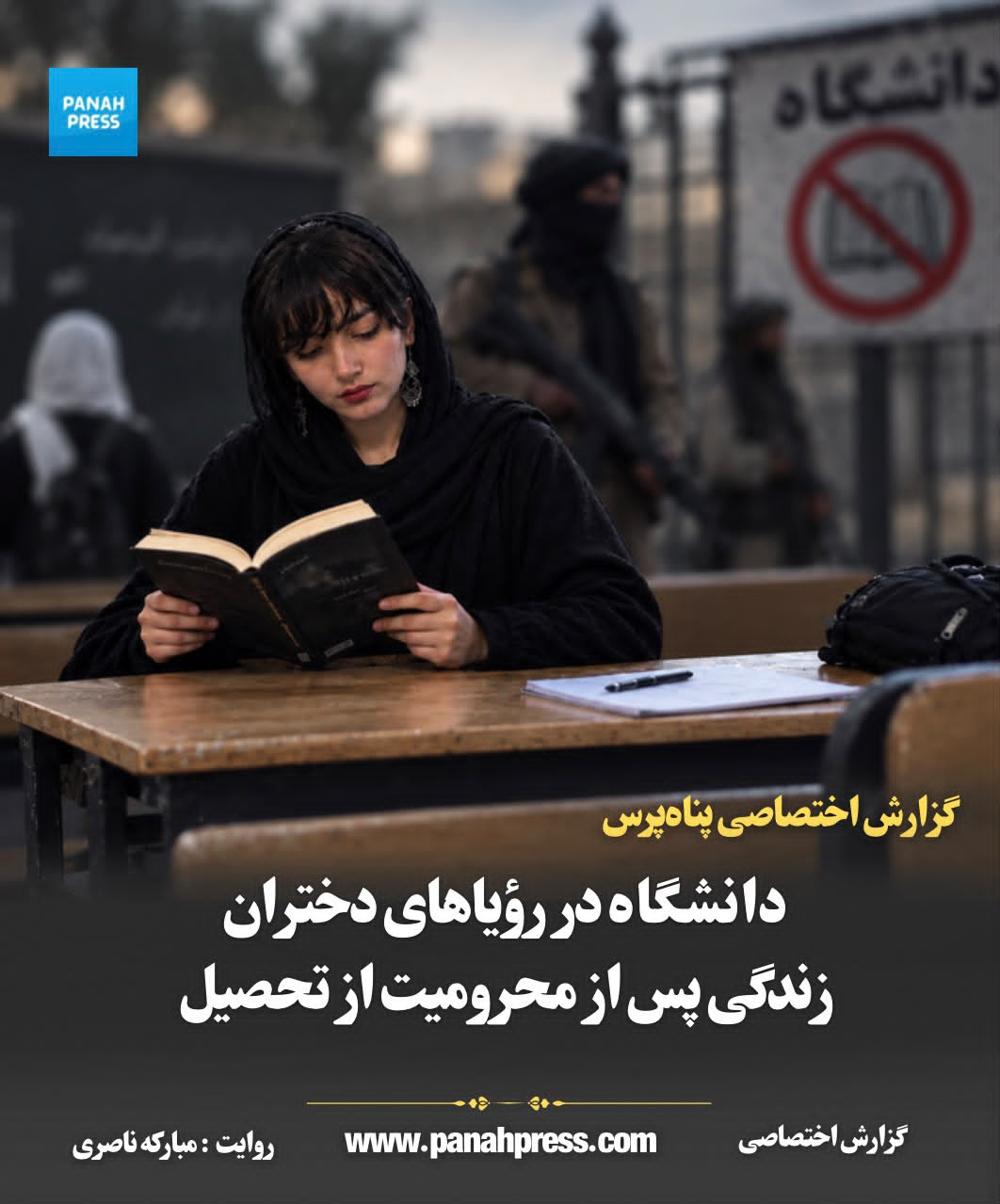
Drawing on her personal experience and the situation of girls denied access to education in Afghanistan, Mubarakah Naseri writes that the closure of university doors to girls has significantly altered the lives and educational futures of thousands of young women.
In her account, she says that after finishing school, she, like many other girls, was preparing to enter university and continue her education. However, the closure of universities to female students disrupted her plans for the future.
According to Naseri, after being denied access to higher education, she tried to continue her studies by obtaining a scholarship abroad. However, she was unsuccessful. She emphasizes that failing to secure a scholarship did not mean the end of her dreams, but instead confronted her with the harsh realities of pursuing education under the current circumstances.
Naseri goes on to write that other girls have also tried to find alternative ways to continue learning. Some have sought scholarships, others have turned to learning new skills, while some have pursued employment opportunities or tried to migrate abroad to continue their education. Nevertheless, she believes that economic constraints, a lack of educational opportunities, and family and social pressures have made the path difficult for many of these girls.
In her account, the journalist and writer also discusses the social consequences of being denied education. She says that some girls have turned to marriage under family and social pressure or after losing hope of continuing their education. According to her, this path has not led to a better life for everyone, and some girls have faced new difficulties after experiencing unsuccessful marriages.
The account states that being denied access to higher education means more than losing the opportunity to earn a university degree. It can also affect girls’ economic independence, self-confidence, career choices, and ability to make decisions about their own futures.
Mubarakah Naseri emphasizes that for her and many other girls, university was not merely a place to study and earn a degree. It was also an opportunity for personal growth, independence, service to society, and building a different future.
She warns that the continued exclusion of girls from higher education could have long-term consequences for their individual lives and the future of society. In her view, girls need genuine educational opportunities, the ability to continue their studies, and the right to choose their own paths in life in order to rebuild their futures.
The account concludes by emphasizing that hope remains alive among girls denied access to education and calling for conditions that would allow them to return to universities and continue their studies.
Source: Mubarakah Naseri’s personal account.
#Afghanistan #AfghanGirls #EducationBan #University #GirlsEducation #PanahPress