
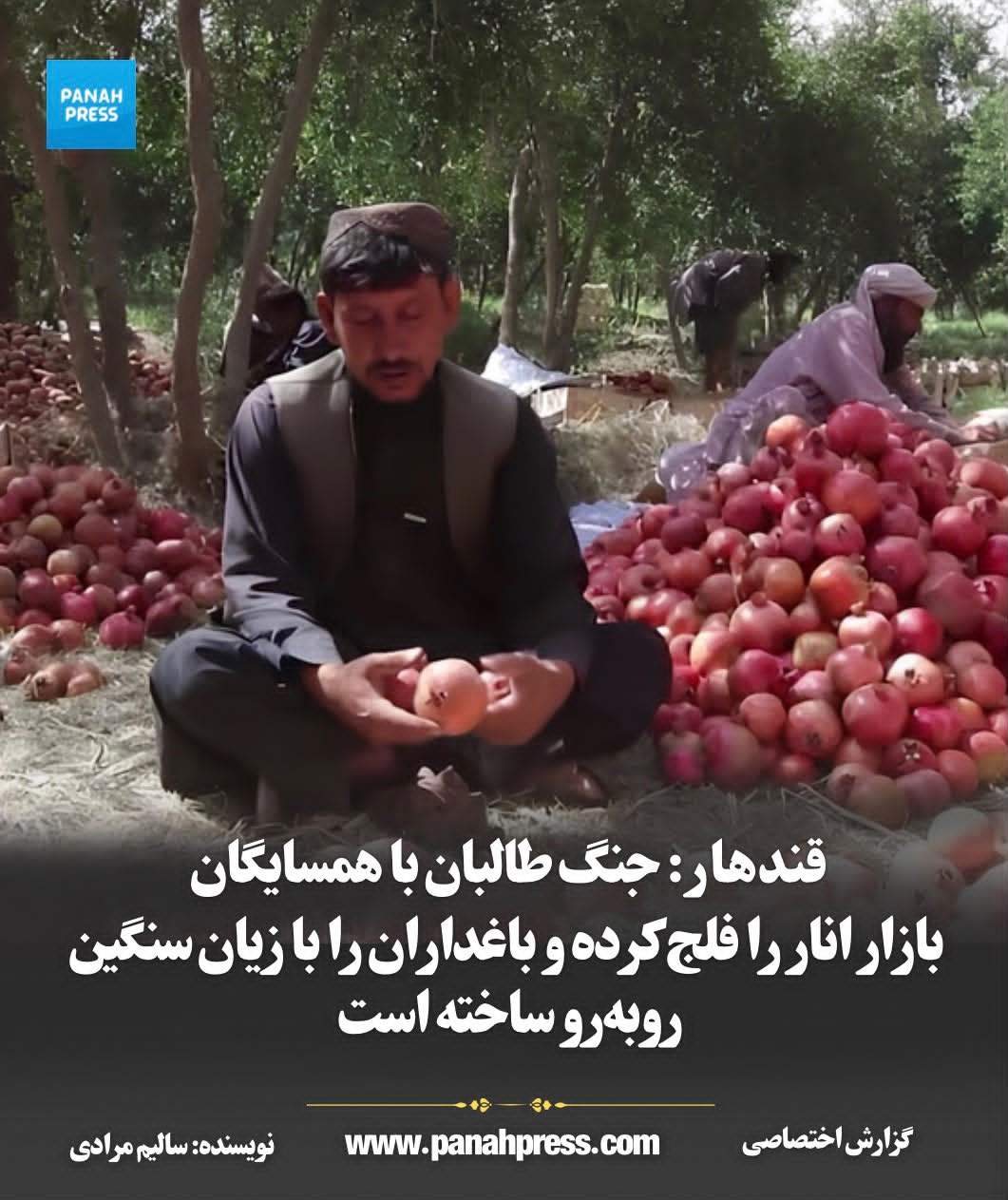
Pomegranate growers in Kandahar province are suffering economic losses amid disruptions to trade routes with Pakistan, falling prices, and difficulties selling their produce. This situation, combined with drought and water shortages, has placed additional pressure on the livelihoods of families dependent on orchards.
According to Salim Moradi, pomegranate growers in Kandahar spend months covering the costs of cultivating and harvesting their crops. However, restrictions on export routes and reduced access to foreign markets have made it difficult for them to sell their produce. Under these circumstances, increased supply in domestic markets and fewer export opportunities can drive prices down and reduce growers’ incomes.
Political and Military Tensions: A Burden on Pomegranate Growers
Tensions and clashes between the Taliban and Pakistan, if restrictions continue and trade crossings remain closed, could have direct economic consequences for Afghan traders, exporters, and producers.
Salim Moradi emphasizes that growers have no role in political and military decision-making. Nevertheless, they directly experience the consequences of disrupted trade relations in their daily lives and incomes. For many of these families, pomegranate sales are an important source of annual income. Falling prices or produce remaining unsold in the market can make it impossible to recover the costs of production, irrigation, and labor.
From this perspective, a key question is what measures Taliban authorities have taken to prevent further losses for growers, secure safe trade routes, and find alternative markets. Another question is what support measures are being considered for farmers whose livelihoods depend on selling agricultural products.
Drought and Water Shortages: Additional Pressure on Producers
According to a report by Pajhwok Afghan News, pomegranate production in Kandahar is projected to decline from approximately 275,000 tonnes in 2025 to nearly 220,000 tonnes in 2026. Drought and water shortages have been identified as major factors behind the decline.
At the same time, concerns have been raised that some growers may cut down their pomegranate trees because of economic difficulties and water shortages. If this situation continues, it could harm not only the current incomes of rural families but also the province’s capacity to produce pomegranates in the coming years.
Kandahar is one of Afghanistan’s major pomegranate-producing regions, and disruptions to the market for this crop can affect employment, household incomes, and the trade in agricultural products.
Growers Need Practical Support
In Salim Moradi’s view, the current crisis once again highlights the connection between political stability, regional trade, and people’s livelihoods. Closed trade routes, fewer export opportunities, and water shortages are challenges that growers cannot overcome entirely on their own.
Reopening trade routes, developing alternative export markets, supporting producers, and addressing the water crisis are among the measures that could ease the economic pressure on growers.
Ultimately, the fundamental question is why farmers who work throughout the year to produce agricultural goods should bear the greatest economic cost of tensions over which they have no say.
Source of opinion and analysis: Salim Moradi, writer.
#Afghanistan #Kandahar #Pomegranates #Farmers #Taliban #Pakistan #Trade #Exports #Drought #EconomicCrisis #PanahPress