

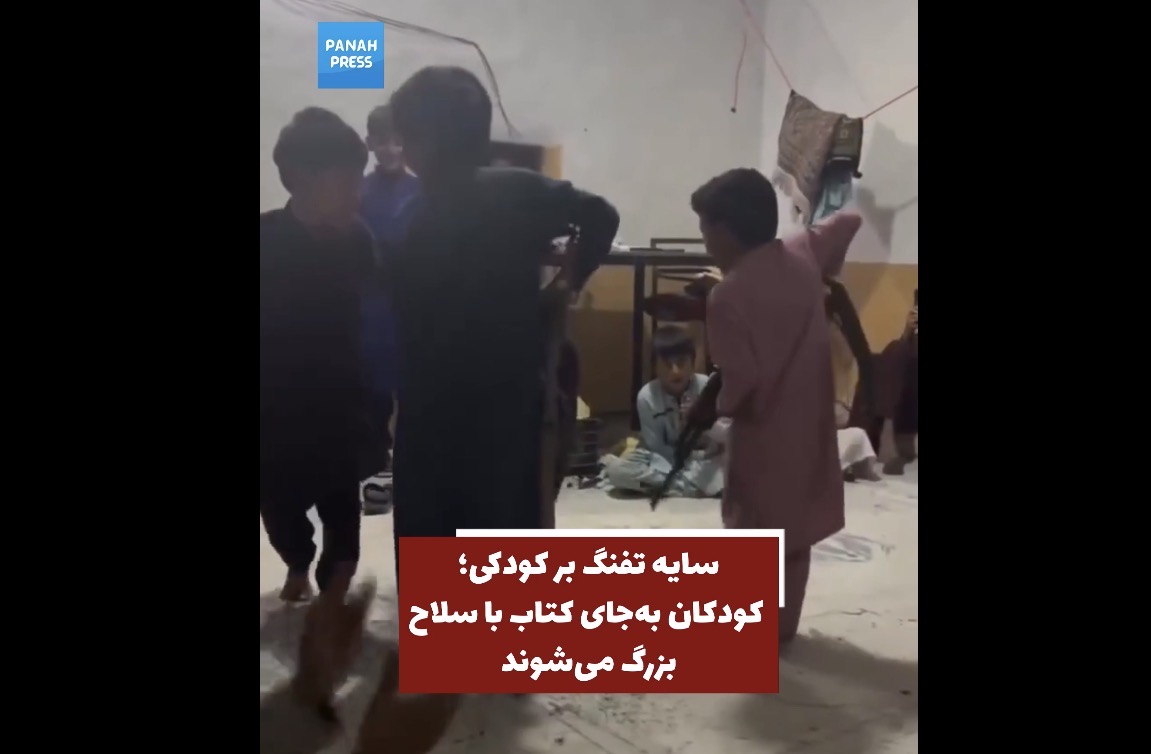
The publication of videos showing armed children dancing and celebrating in military environments has sparked growing concerns about the future of Afghanistan’s younger generation. A number of social observers and child rights advocates warn that the expansion of militarized environments around children could have deep and long-term consequences for Afghan society.
According to them, childhood should be a period of education, play, intellectual development, and the nurturing of talents. However, early exposure to weapons and a culture of violence increases the risk of raising a generation whose childhood experiences are closely tied to conflict and insecurity.
Experts emphasize that Afghanistan has suffered for decades from extremism, war, and instability. They note that even during the Republic era, despite progress in education, media, women’s rights, and civil society, the roots of extremism and terrorism were never fully eradicated, ultimately contributing to the continuation of crises.
Meanwhile, concerns are growing over educational restrictions, the decline of cultural activities, and children’s increasing distance from learning environments. Analysts warn that keeping children away from schools, arts, and cultural programs could create serious challenges for social development and long-term stability.
Despite these concerns, many observers believe that hope for the future still exists. They argue that investing in education, culture, awareness, and peaceful coexistence can help build a better future for Afghanistan.
Experts stress that Afghanistan’s future is directly linked to the future of its children. Protecting the rights, education, and mental well-being of the younger generation is considered one of the country’s most important requirements for achieving lasting peace and sustainable development.